Baccarat's Integration With Emerging Esports Crossover Events and Resulting Adjustments to Table Limit Structures

Esports crossover events have started blending traditional baccarat gameplay with competitive gaming formats across multiple platforms since early 2025, and operators have responded by recalibrating table limit structures to accommodate larger participant pools and streaming audiences. Data from industry tracking services indicates that hybrid tournaments now feature simultaneous digital and physical betting interfaces, which requires fresh approaches to minimum and maximum wagers at each station.
Expansion of Hybrid Tournament Formats
Multiple casino groups began testing baccarat segments inside major esports festivals during the first half of 2026, where players compete in virtual matches while placing side wagers on live dealer shoes streamed from adjacent tables. These events combine audience participation through mobile apps with on-site action, creating demand for limits that scale quickly between rounds. Observers note that venues hosting such crossovers report attendance spikes of 25 to 40 percent compared with standard baccarat floors, according to aggregated operator filings.
Adjustments often involve raising maximum bets during peak tournament windows while introducing tiered minimums for qualifying rounds. This structure allows casual esports viewers to enter lower-stake pools before advancing to higher-limit tables once they demonstrate familiarity with the rules. Research compiled by the American Gaming Association shows that crossover events held in Las Vegas and Macau properties recorded average table utilization rates exceeding 85 percent during June 2026 festival dates.
Technical Modifications to Limit Frameworks
Casino systems now integrate real-time analytics that monitor viewer counts and bet volume from connected esports platforms, triggering automatic limit increases when participation thresholds are met. Software updates allow floor supervisors to shift a single table from a 500-unit maximum to 5,000 units within minutes without manual resets. Such flexibility addresses the rapid influx of digital bettors who transition from screen-based play to physical tables during live crossover segments.
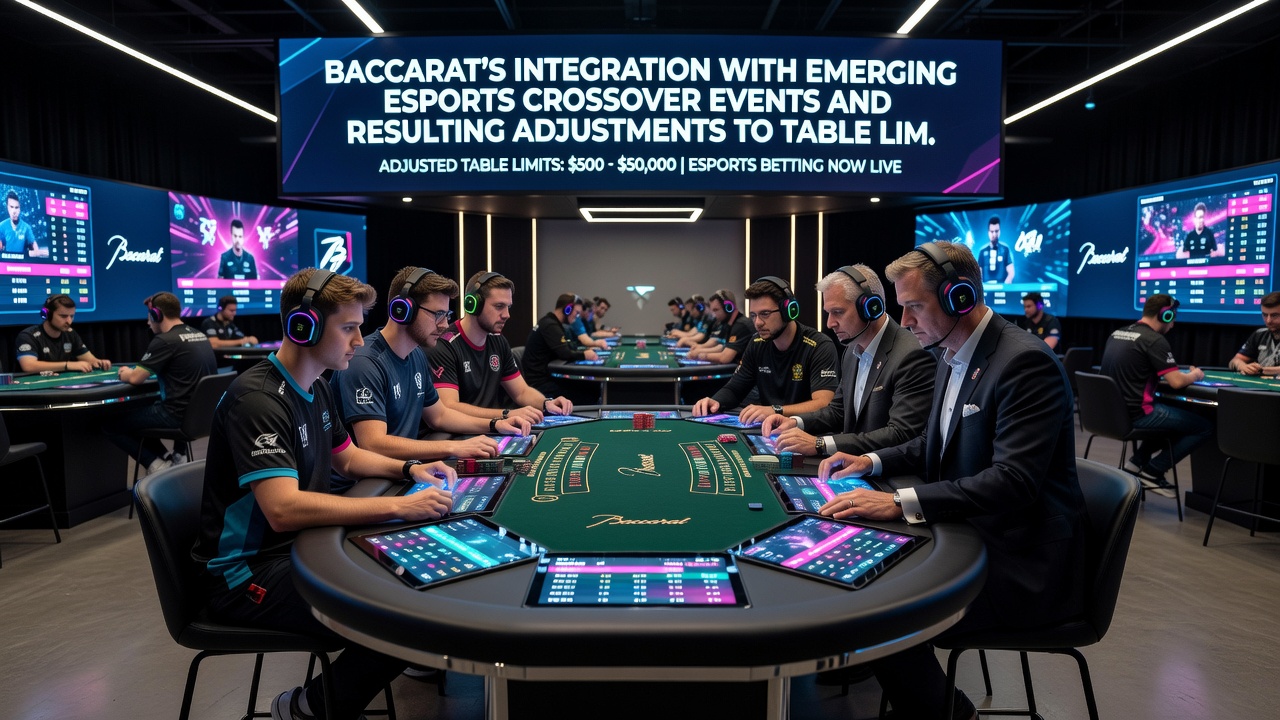
One documented case at a Southeast Asian integrated resort involved splitting a standard baccarat pit into three zones with staggered limits: entry-level tables capped at 200 units for new crossover participants, mid-tier stations set at 1,000 units for advancing competitors, and premium tables reaching 10,000 units reserved for final-stage matches. This zoning approach reduced congestion while maintaining payout integrity across all segments, as verified through post-event audit reports submitted to local regulators.
Regulatory and Operational Responses
Gaming control boards in several jurisdictions have issued updated guidelines requiring operators to log limit changes during esports-linked sessions and to maintain separate audit trails for digital versus physical wagers. These measures ensure transparency when prize pools combine contributions from both streams. In June 2026, the Nevada Gaming Control Board released preliminary data showing a 12 percent rise in baccarat handle attributed directly to crossover programming at monitored properties.
Operators have also introduced dynamic commission structures that adjust based on table limit tiers, helping offset the higher operational costs of staffing hybrid events. Staff training programs now emphasize rapid protocol shifts between standard play and tournament modes, while hardware upgrades support instant display of updated limits on player-facing screens and broadcast overlays.
Impact on Player Engagement Metrics
Analytics from participating sites reveal that average session duration for crossover attendees extends 30 percent longer than traditional baccarat sessions, partly because participants remain engaged through multiple limit tiers and digital qualifiers. Retention data collected across platforms indicates repeat crossover involvement increases when table limits reset visibly between rounds, giving viewers clear signals about progression opportunities.
External research from the UNLV Center for Gaming Research examined three properties that adopted these adjustments and found measurable growth in cross-platform account linkages, where esports account holders converted to casino loyalty memberships at higher rates. The study tracked activity through the second quarter of 2026 and documented sustained increases in both online and on-site baccarat volumes following each major event.
Conclusion
Integration between baccarat and emerging esports crossover formats continues to drive structural changes in table limit management, with operators deploying scalable systems and regulators refining oversight protocols to match the pace of these developments. As events scheduled through the remainder of 2026 build on June benchmarks, further refinements to zoning, commission models, and digital-physical synchronization remain likely based on ongoing performance data.