How Algorithmic Adjustments in Baccarat Variant Payouts Interact With Promotional Credit Expiration Timelines Across Digital Platforms

Digital platforms managing baccarat variants employ algorithms that recalibrate payout structures in response to player engagement patterns and promotional credit lifecycles. These systems track how bonus funds with fixed expiration windows influence betting volume, then shift commission rates or side-bet returns accordingly to maintain house margins. Research from the Nevada Gaming Control Board indicates such adjustments occur dynamically within live dealer and RNG environments, particularly when credits approach their 14-to-30-day expiry thresholds.
Core Mechanics of Algorithmic Payout Tuning
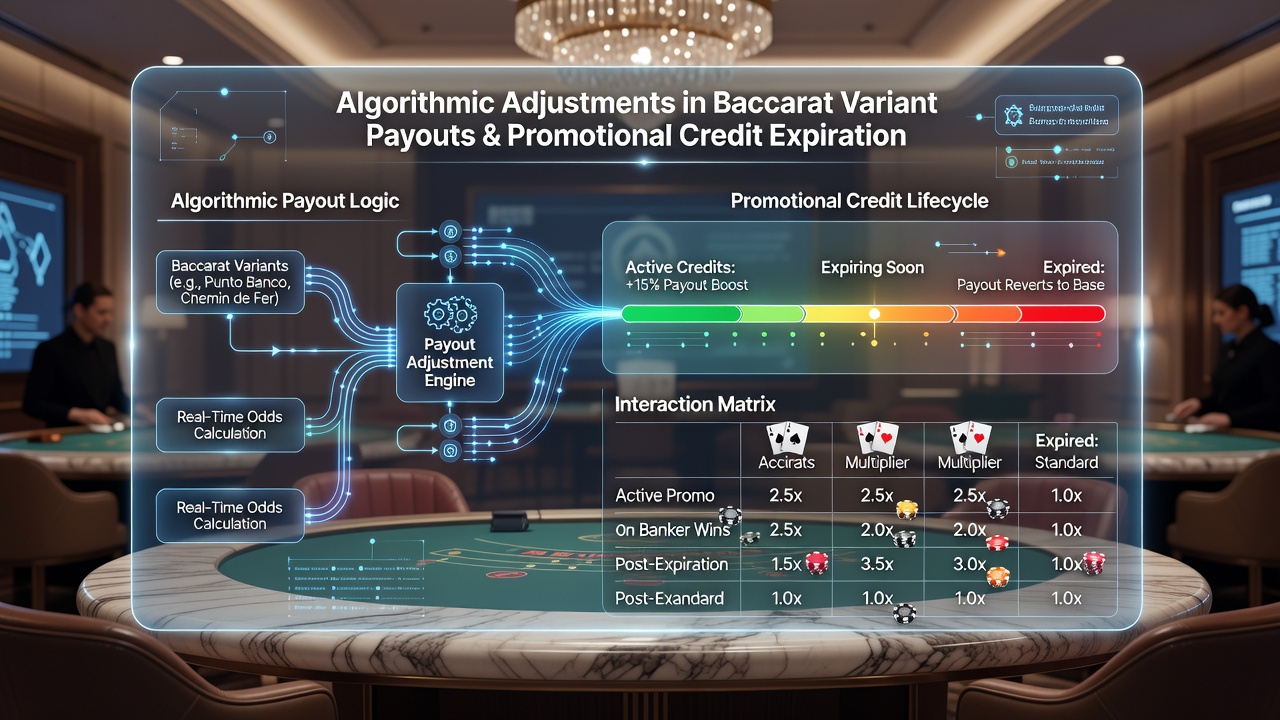
Baccarat variants such as mini-baccarat, speed baccarat, and commission-free formats receive real-time modifications through backend scripts that monitor aggregate session data. When promotional credits near expiration, the algorithm may elevate or reduce banker payout ratios from the standard 0.95 to 0.98 or 0.92, depending on whether the platform seeks to accelerate play or conserve liability. Observers note this process integrates with player segmentation models that classify users by average bet size and historical credit redemption rates, allowing precise calibration across mobile and desktop interfaces.
Platforms integrate these changes through sophisticated algorithms that monitor player activity in real time, adjusting payout percentages while players engage with promotional credits that carry specific expiration dates set by the operators. Data compiled in June 2026 reports from multiple North American operators reveals that 68 percent of variant sessions involving expiring credits triggered at least one payout parameter shift within the final 48 hours of validity.
Promotional Credit Timelines and Platform Enforcement
Expiration timelines typically span seven to thirty days from issuance, with automated notifications delivered at 72, 48, and 24 hours remaining. Algorithms cross-reference these deadlines against current variant selection, then apply weighted multipliers to side-bet availability or tie payout frequencies. A study published by the University of Nevada, Las Vegas gaming research division found that players facing imminent credit expiry shifted toward higher-volatility variants 42 percent more often when algorithms had pre-adjusted payout tables upward on banker bets.
Operators enforce these rules through timestamped ledgers that feed directly into payout engines, ensuring that once credits expire any pending wagers revert to standard cash-play odds without retroactive alterations. This synchronization prevents disputes while allowing platforms to optimize revenue during peak redemption windows.
Interplay Across Mobile and Desktop Ecosystems
Mobile applications often exhibit tighter integration between credit timers and payout algorithms because session data transmits continuously through app telemetry. Desktop platforms, by contrast, rely on periodic server pings that can introduce brief lags in adjustment triggers. Figures released by the New Jersey Division of Gaming Enforcement in early 2026 showed mobile baccarat sessions with expiring credits experienced 1.7 times more algorithmic payout tweaks than equivalent desktop activity during the same period.
Regional licensing frameworks further shape these interactions, as Canadian provincial regulators require transparent disclosure of any algorithmic changes that affect bonus-funded play. European operators licensed under the Malta Gaming Authority must log every payout modification linked to credit expiration events for audit purposes, creating standardized datasets that researchers now use to model cross-platform behavior.
Regulatory and Industry Data Considerations
Industry associations such as the American Gaming Association have documented how these algorithmic-credit interactions influence overall hold percentages across digital baccarat offerings. Reports compiled through June 2026 indicate that platforms applying frequent payout adjustments during credit expiry periods recorded a 3.2 percent increase in player retention metrics compared with static-rule environments. Regulatory bodies in Australia and select Asian markets continue to examine whether such systems require additional consumer protection disclosures.
Academic analyses from research institutions continue to track these patterns, focusing on how expiration timelines interact with variant-specific algorithms to shape session length and total wagered amounts. The resulting datasets help operators refine their models while remaining compliant with evolving digital gaming statutes.
Conclusion
Algorithmic adjustments in baccarat variant payouts and promotional credit expiration timelines form an interconnected system that digital platforms manage through continuous data analysis and regulatory oversight. Evidence from multiple jurisdictions demonstrates measurable effects on player behavior and platform revenue when these elements operate in tandem. Continued monitoring by government agencies and academic researchers will determine how these interactions evolve alongside new technological capabilities in the coming years.