How Regional Licensing Frameworks Alter Baccarat Commission Structures and Side Wager Payouts in Emerging Markets
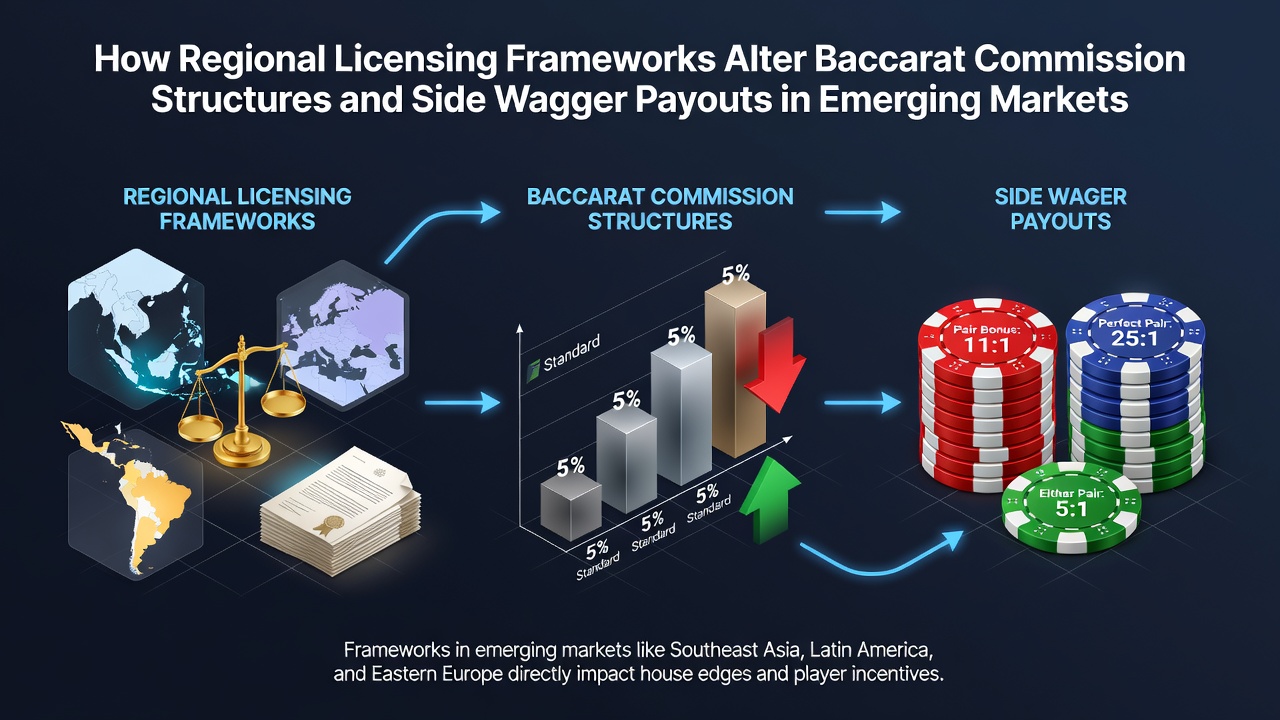
Regional licensing frameworks shape baccarat operations in emerging markets through specific rules on commission rates and side wager structures, and operators must adjust their offerings to comply with local requirements that differ from established casino jurisdictions. Licensing bodies in Southeast Asia and Latin America impose conditions that directly influence how much players pay on banker bets and what returns side wagers deliver, creating variations that reflect each market's regulatory priorities around revenue collection and player protection.
Licensing Structures in Key Emerging Regions
Philippine regulations under PAGCOR set baseline commission rates at 5 percent for banker wins while allowing limited flexibility for integrated resorts that meet certain investment thresholds, whereas Vietnamese casino licenses often require operators to maintain the standard rate but add reporting obligations that affect how side bets like the dragon bonus are priced. Brazilian frameworks, still developing ahead of full casino legalization, have already signaled through preliminary state-level proposals that commission structures could include tiered reductions tied to volume commitments, a departure from the fixed model used in Macau.
These differences arise because licensing authorities prioritize local economic goals, and emerging markets frequently attach conditions that tie commission percentages to tax contributions or infrastructure investments. One licensing round in the Philippines during 2024 introduced provisions that let certain operators test reduced commissions on high-limit tables, provided they submit monthly data on player retention and tax yields.
Commission Adjustments and Market Entry Requirements
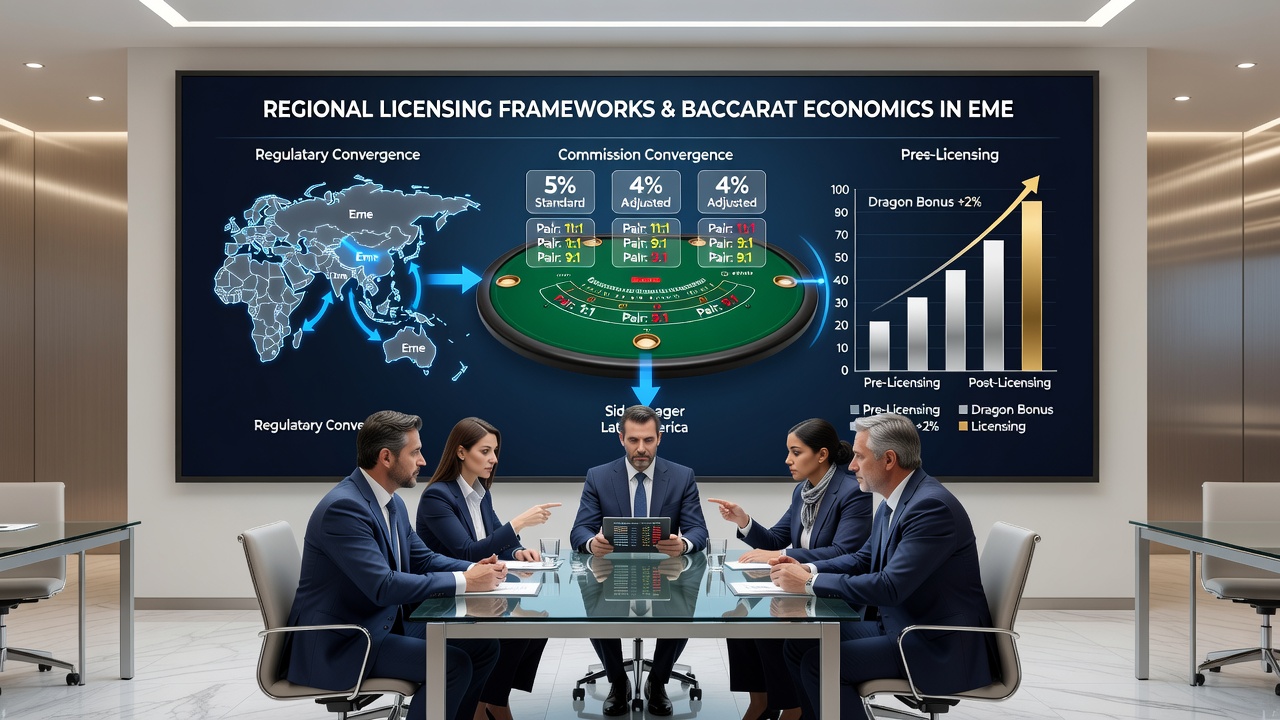
Operators entering new markets encounter licensing terms that recalibrate the traditional 5 percent banker commission to align with revenue-sharing agreements, and some frameworks in Cambodia's border casino zones have permitted commissions as low as 4 percent when operators agree to higher minimum capital contributions. Data from industry monitoring groups shows these adjustments correlate with increased table volumes in the first year of operation, though overall house edges remain within narrow bands due to simultaneous tweaks in side wager payouts.
Side bet availability also shifts under licensing rules, with certain jurisdictions restricting the pair bets or requiring higher house edges on tie wagers to offset any commission reductions. In one documented case from a Vietnamese integrated resort that opened in 2025, regulators approved a 4.8 percent banker commission paired with a tie payout lowered from 8:1 to 7.5:1, a combination that preserved the operator's margin while satisfying local content rules on game offerings.
Side Wager Payout Variations Across Jurisdictions
Side wager payouts respond to licensing conditions that emphasize responsible gaming metrics, and several emerging markets now require operators to publish exact odds for every approved bet type before receiving final approval. Philippine licensees must display payout tables that reflect any commission changes, while Brazilian proposals under consideration for 2026 include mandates for independent audits of side bet probabilities to prevent disguised increases in house advantage.
Research from regional gaming associations indicates that markets with stricter licensing renewal cycles tend to standardize side wager payouts more quickly, reducing the range of available bets but increasing transparency. Observers note that this standardization often occurs through phased implementation, where operators first adjust banker commissions and later align side bets during license reviews scheduled for mid-2026 in multiple Southeast Asian jurisdictions.
Operational Impacts on Table Dynamics
Dealers and pit managers in licensed emerging market casinos adapt procedures to match the commission and payout rules embedded in their operating permits, and these adaptations include modified tracking systems for banker streaks when commissions fall below standard levels. Training programs in Cambodian and Vietnamese properties now incorporate jurisdiction-specific modules that cover how reduced commissions interact with side wager limits, ensuring compliance during audits.
Technology providers have responded by developing configurable software that lets operators toggle between payout structures based on the active license, and several platforms already in use across the Philippines and Latin America support real-time updates when regulatory bodies issue amendments. This flexibility helps properties maintain continuous operations while meeting evolving terms that often take effect at the start of new fiscal periods, including anticipated updates around June 2026.
Conclusion
Regional licensing frameworks continue to drive measurable changes in baccarat commission structures and side wager payouts throughout emerging markets, with operators aligning their offerings to satisfy local conditions on revenue sharing, transparency, and game approval. These adaptations produce consistent but jurisdiction-specific variations that reflect each authority's approach to balancing operator viability with regulatory oversight, and ongoing developments scheduled for 2026 suggest further refinements will follow similar patterns established in recent licensing rounds.